


Afternoon tea etiquette
There aren’t many more quintessentially British traditions than the afternoon tea. The ritual was started by the Duchess of Bedford in 1840. Afternoon tea comes along with a set of social conventions. Here are some of our tips on the etiquette of afternoon tea.
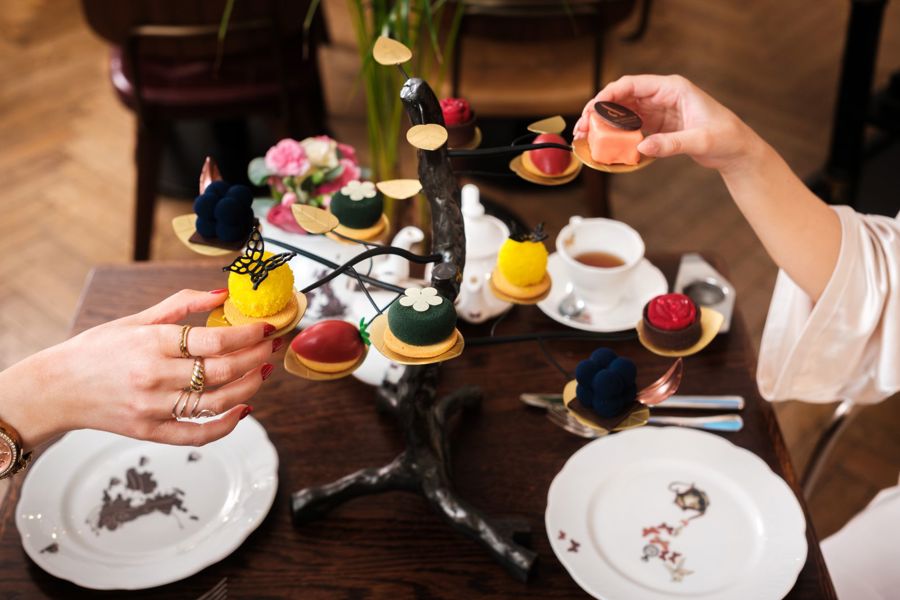
Preparing your tea
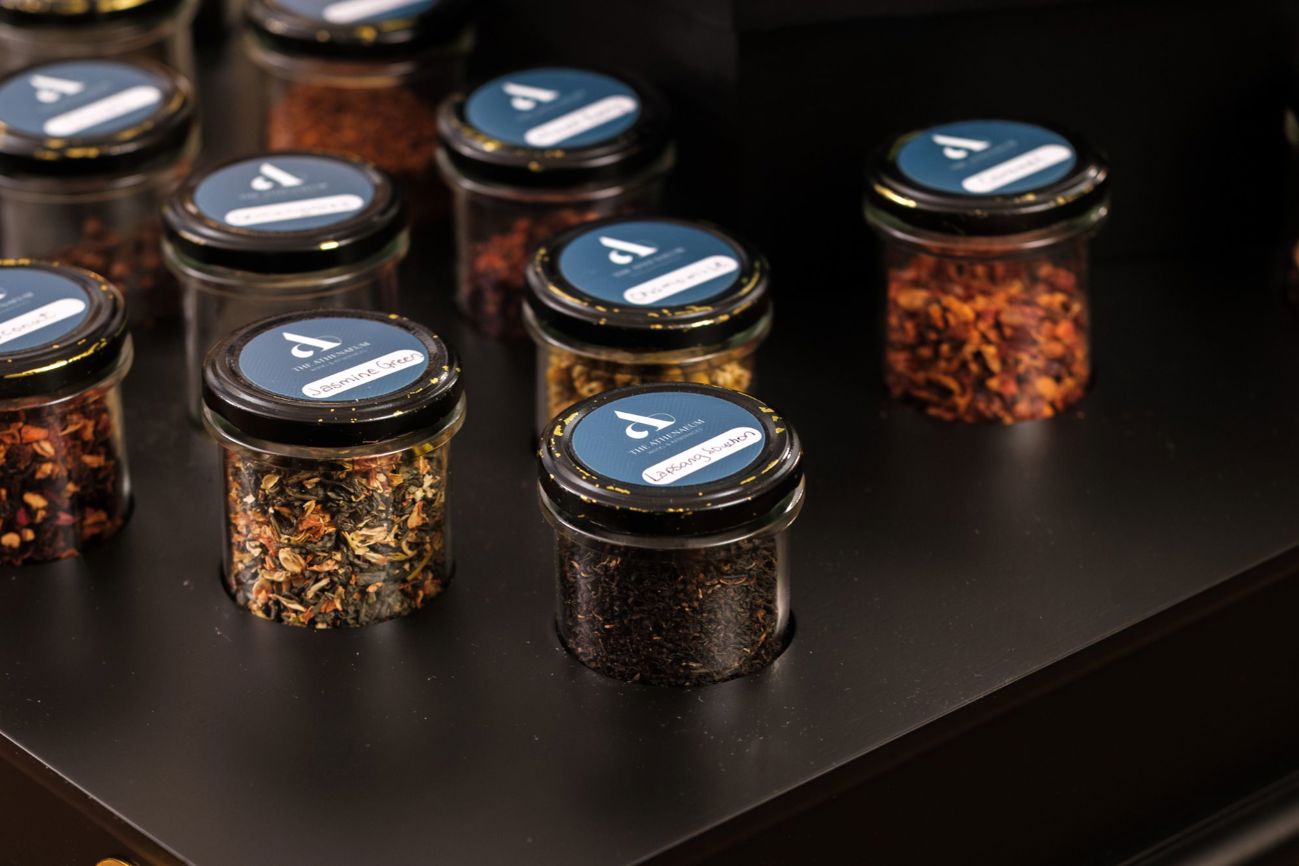
There are hundreds of types of tea on offer during afternoon tea experiences. The most traditional tea to choose is English Breakfast, a blend of black teas originating from Assam, Ceylon and Kenya. Allow the tea to brew for between three and six minutes; leave it any longer and you risk ‘stewing’ the tea, damaging the flavour.
Some say it’s traditional to put milk into your cup first before pouring the tea. However, in the past this was to stop low quality drinking vessels from cracking due to the hot liquid. Since that’s not an issue nowadays, it’s more common to add milk after the tea. This allows you to add just the perfect amount of milk to create the tea colour of your liking.
When pouring the tea, don’t forget to put the tea strainer on your cup first, or risk having tea leaves floating in your cup.
There’s even a correct way to stir tea, which is up and down from about the 6 o’clock position to the 12 o’clock position, without clinking the spoon on the side of your cup.
Order of eating
When deciding what order to eat your afternoon tea goodies in, think savoury first and progress to sweet.
Finger sandwiches served at afternoon tea always have their crusts cut off and are served in small squares, rectangles or triangles – ideal for eating by hand.
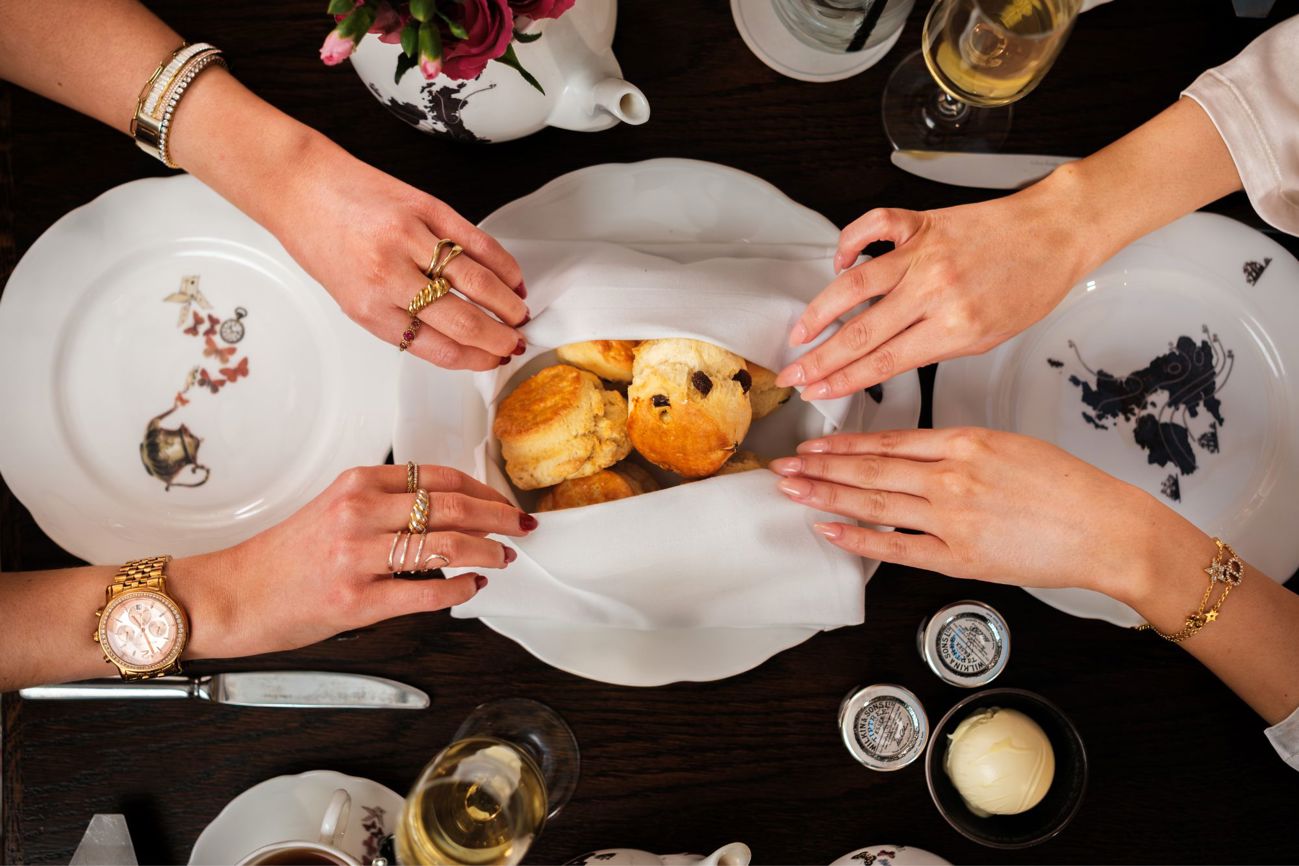
Next move onto the scones and cakes. Scones should break into two halves easily without the need for using a knife. They should be eaten in two halves, rather than being sandwiched back together.
There’s an everlasting debate about whether cream or jam should be added first to the scone. While the Devon tradition is for cream with jam on top, the Cornish prefer it the other way around. Don’t worry, whichever way around you decide, you won’t commit a social faux pas. The only thing to remember is that scone should be pronounced ‘skon’ and not ‘skone’.
Afternoon tea myths
When drinking your tea, some people say sticking your little finger out creates a perfect balance when handling your tea cup. This is a myth, albeit a funny one. All fingers should be kept on or near the teacup when drinking your tea.
Afternoon tea is often thought to be the same as high tea and cream tea. In fact, high tea is a more substantial savoury meal consumed in the evening. Cream tea only includes tea and scones.
Tea is good for your health, full of catechins, a form of antioxidant. Some say adding milk to tea reduces the health benefits, but this is completely false. So if you like your tea milky, pour away.
Afternoon Tea at The Athenaeum
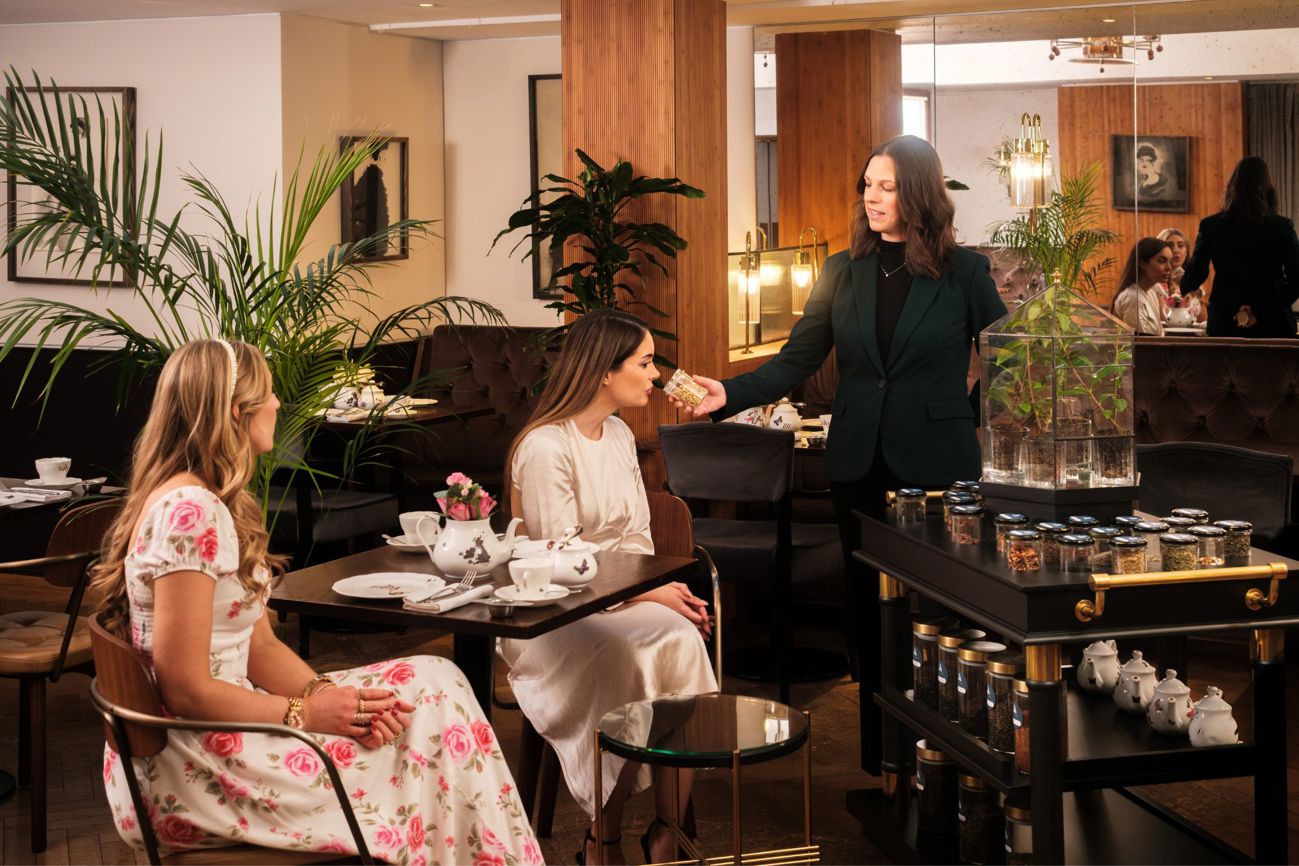
Putting on a good Afternoon Tea is something The Athenaeum has down to a fine art. It’s legendary, in fact, and award-winning, too. With a selection of three sumptuous afternoon teas available including our Fancies and Foliage afternoon tea, gluten free afternoon tea, extra, bespoke tea blending experience with your afternoon tea and savoury options too. Enjoy your choice of tea in the surroundings of Art Deco splendour at our restaurant.
More to Explore

New Fancies & Foliage afternoon tea launched in the heart of Mayfair

The Athenaeum Hotel & Residences appoints new General Manager

Explore Park Lane. One of London's most iconic road in Mayfair.